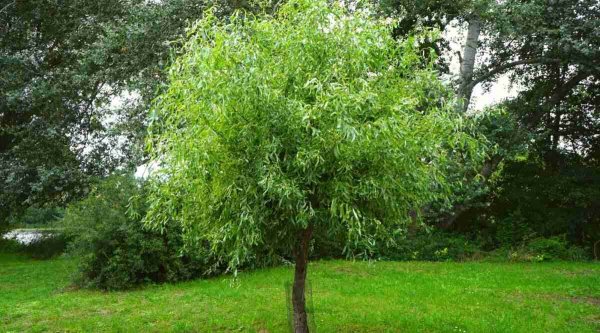
For gardeners seeking a small tree with an unconventional silhouette, the corkscrew willow (Salix matsudana 'Tortuosa') offers a fast-growing option that thrives in damp soils. Native to East Asia, this deciduous tree is known for its gnarled, twisting branches that provide striking winter interest. Unlike the familiar weeping willow, the corkscrew willow has an upright form with a rounded crown, reaching 20 to 40 feet in height and 15 to 25 feet in width.
The 'Tortuosa' cultivar, sometimes called curly willow, is a member of the Salicaceae family. Its most distinctive feature is the irregular, wavy growth of its branches and stems, which become more pronounced as the tree matures. In summer, the narrow, slightly curled leaves—three to six inches long—form a dense canopy that partially hides the contorted limbs. In autumn, the foliage turns a showy yellow before dropping, revealing a mass of twisted branches that stand out against the winter sky.
These trees are well-suited for moist, sunny locations, making them a practical choice for rain gardens, pond edges, and other low-lying areas where water collects. They tolerate a range of soil types, from clay to sandy, and prefer a pH between 5.6 and 7.8. Full sun to partial shade is ideal, with at least four to six hours of direct sunlight per day for optimal growth.
Planting and Early Care
Spring is the recommended time for transplanting corkscrew willows. When planting, choose a site away from structures, sidewalks, and underground utility lines, as the root system is shallow and wide-spreading. Dig a hole about three times the width of the pot, gently spread the roots, and position the trunk base about an inch above the surrounding soil level. Water deeply after planting and continue to provide regular moisture during the first year to help the tree establish a strong root system.
Propagation is straightforward through hardwood cuttings taken in winter while the tree is dormant. This method yields genetically identical clones, allowing gardeners to replicate a desirable specimen without waiting for seed germination.
Maintenance and Common Challenges
Corkscrew willows are considered medium-maintenance trees. They do not require fertilizer if planted in average soil, though an annual layer of organic compost or mulch can support healthy growth. Regular weeding and mulching help retain soil moisture and suppress competition. Pruning is optional but can be used to remove dead or crossing branches and to shape young trees.
One significant limitation is the tree's relatively short lifespan, typically 15 to 30 years under ideal conditions. Additionally, the branches are somewhat brittle and may break in storms. The tree also drops catkins in spring and leaves in autumn, which some gardeners may find messy. Common pests include aphids and willow beetles, which cause minor leaf damage but rarely threaten the tree's overall health. Powdery mildew, a fungal disease, can be managed by pruning affected branches and raking fallen leaves.
Landscape Uses and Varieties
Beyond its ornamental appeal, the corkscrew willow provides ecological benefits. It serves as a larval host for the viceroy butterfly and attracts native bees and other pollinators during its spring bloom. Birds use the tree for nesting and foraging.
Several cultivars offer variations in stem color and form. 'Golden Curls' features yellow stems that brighten the winter garden, while 'Scarlet Curls' displays golden-brown branches with scarlet-red stems. The 'Navajo' willow, also known as the globe willow, grows taller—up to 50 feet—with a more traditional rounded crown and excellent yellow fall color.
For those with a sunny, damp spot that needs a distinctive focal point, the corkscrew willow presents a compelling option. Its twisted branches provide year-round interest, and its tolerance for wet soil makes it a valuable addition to challenging landscapes. While not a long-lived tree, its rapid growth and unique form offer immediate impact in any garden.