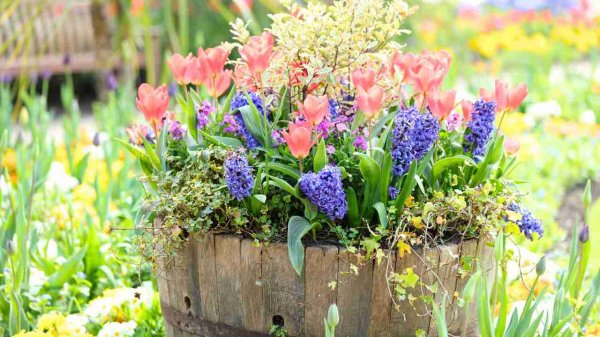
When winter loosens its grip, container-grown bulbs can turn a porch or patio into a canvas of early color. By planting in pots, gardeners gain control over soil quality and sunlight, and can position blooms where they are most visible. The key to a striking display lies in choosing combinations that bloom in sequence and complement each other in height, form, and hue.
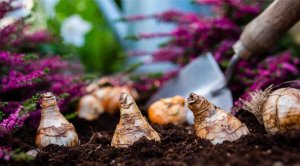
Successful container bulb gardening starts with the right foundation. Pots must have excellent drainage, and the soil should be loose and fertile. In mild climates, containers can remain outdoors all winter and will typically perform well in spring. In colder regions, moving pots to a sheltered but unheated space provides necessary insulation.
Pairing for Visual Harmony
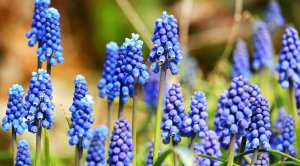
One reliable pairing is tulips with muscari. Muscari, with their low-growing clusters of rounded flowers, contrast nicely with taller, single-flowered tulips. Both thrive in full sun to partial shade and prefer well-drained soil. To have them bloom simultaneously, choose mid- to late-season tulips. A soft palette of pink tulips above purple muscari evokes a classic cottage-garden feel, often flowering around Easter.
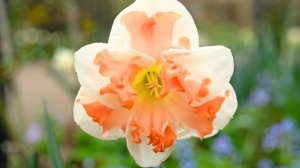
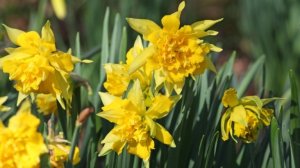
Another cheerful trio combines hyacinths, daffodils, and muscari. Pink hyacinths offer bold color and a distinctive fragrance, while yellow daffodils bring warmth. Blue muscari add a cool, refined note without stealing the spotlight. Because these bulbs bloom close together but not all at once, the display evolves gradually, creating a natural, wildflower-like effect.
Extending the Blooming Season
For a longer-lasting show, pair early-blooming crocuses with early tulips. Crocuses emerge as snow melts, and tulips begin opening as the crocuses peak. White crocuses can echo the winter snow, with bold red tulips following for a striking contrast.
A mix of crocus, daffodil, and muscari offers versatility. Crocuses bloom first in shades of violet, plum, or orange; daffodils follow with golden trumpets; and muscari, with their succession of small blossoms, extend the display. The warm terracotta containers often used for this combination complement the cooler flower tones.
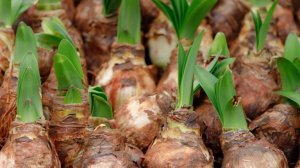
Hyacinths and crocuses also work well together. Crocuses bloom first, while hyacinths are just beginning, providing early color and fragrance. Because crocus bulbs are small and planted shallowly, while hyacinth bulbs are larger and deeper, they layer easily in the same pot, prolonging the bloom period.
Shade-Tolerant and Bold Choices
For shaded areas, crocuses and scilla make a delicate pair. Both are low-growing, early bloomers that tolerate partial shade, thriving with just a few hours of sun. Their fine, wildflower-like appearance suits woodland settings.
When the season is in full swing, hyacinths and tulips create a bold statement. Blue-violet hyacinths paired with hot pink tulips offer vivid, jewel-toned contrast. The fragrance of hyacinths mingles with the fresh, green scent of tulips, making this combination a sensory highlight.
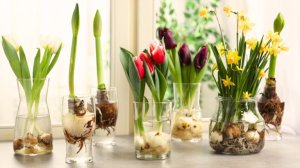
Tulips and daffodils remain a classic pairing. Daffodils typically bloom slightly earlier, extending the display. Their forms differ—tulips are upright and cup-shaped, daffodils have trumpet-like blooms—creating visual interest. A mix of pink and red tulips with yellow and white daffodils works well, but any color scheme can succeed.
For a more refined look, tulips and irises offer sophistication. Both have similar needs and overlapping bloom times, making them low-maintenance. Red tulips paired with blue irises create a striking contrast that draws the eye.
Ultimately, container bulb gardening invites experimentation. By selecting combinations that vary in bloom time, height, and color, gardeners can craft a dynamic display that evolves through the spring months.