Gardeners facing the challenge of perennials that spread beyond their bounds now have a comprehensive, chemical-free playbook. The guide, drawn from horticultural expertise, details how to manage vigorous growers such as mint, kudzu, and English ivy using manual and physical methods, avoiding the environmental drawbacks of herbicides.
Non-native invasive species, like kudzu and Japanese honeysuckle, are particularly aggressive because they lack natural predators and competitors in U.S. ecosystems. They can quickly overtake a garden, rooting, reseeding, and creeping into unwanted areas. Native spreaders, such as bee balm and yerba buena, are more manageable but still require regular upkeep to keep them in check.
Chemical-Free Control Methods
The core of the strategy is to avoid herbicides, which often contain toxic surfactants not listed as active ingredients, posing risks to local wildlife. Instead, the guide recommends several physical techniques.
Hand pulling is most effective in soft, moist soil, making it ideal for removing outer clumps or stray seedlings. For deep-rooted plants like dandelions, tools such as the CobraHead Weeder, with its diamond-shaped tip, can assist. Digging is better for large patches or tough plants like ivy and blackberry, ensuring all roots are removed to prevent regrowth.
For extensive areas, smothering with tarps or cardboard is effective. Clear tarps use solarization to heat the soil, while opaque tarps block light, both killing plants within weeks. Cardboard can be layered with compost, allowing new plantings above while suppressing weeds below. Barriers, such as edging or fences, prevent spread by creating physical boundaries that plants cannot easily cross.
The 'chop and drop' method is recommended for summer when soil is dry and roots are hard to pull. Cutting stems and adding them to a hot compost pile kills seeds, preventing further spread. This is particularly useful for reseeding perennials like clover and mint.
Profiles of Common Spreaders
The guide profiles several perennials known for their vigorous growth. Mint, while not technically invasive, spreads rapidly through roots and seeds, best contained in containers. Bee balm, a native U.S. plant, spreads via stems and seeds but can be managed by pulling and dividing. Yerba buena, another native, requires snipping stems before they root.
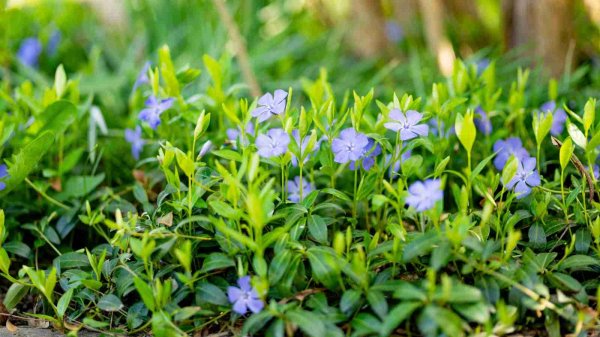
Vinca, or periwinkle, is invasive in states like Virginia and California, forming dense mats that crowd out other plants. Blackberry, especially the Himalayan variety, can turn forests into monocultures, requiring complete root removal and solarization. Sweet woodruff, creeping Jenny, and spotted deadnettle are other aggressive spreaders that benefit from regular pulling or smothering.
Kudzu, infamous in the South, is now less of a threat due to the Japanese kudzu bug, but still needs control if near gardens. Lesser celandine, with its three propagation methods, is extremely difficult to remove, requiring tarps left for two years. English ivy, an invader in the Pacific Northwest, can be removed by digging and mulching, with sprouts pulled for a year or two.
For those who prefer not to remove them, strawberries can be allowed to spread, providing more fruit. The key is to understand each plant's growth habit and choose the appropriate control method, whether pulling, digging, smothering, or installing barriers.