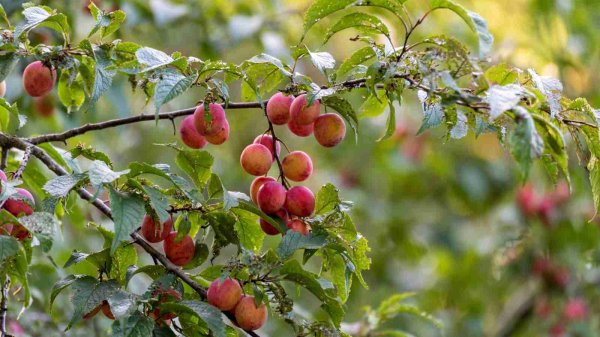
For many gardeners, the appeal of fruit trees extends beyond the harvest. The spring display of blossoms on bare branches is a spectacle in itself, and native plum species offer this show while supporting local ecosystems. Across the United States, from coastal regions to the Midwest and northern climates, there is a native plum suited to nearly every landscape.
While many commercial plums are hybrids or introduced from Europe and Japan, North American natives provide a hardy alternative. These species are adapted to local conditions, often requiring less water and care than their non-native counterparts. The following list highlights 15 native plums, each with unique characteristics and regional strengths.
Small Trees for Compact Gardens
The Allegheny plum (Prunus umbellata) is a compact option, staying under 20 feet tall. Its white flowers, which fade to pink, emerge with the leaves, creating a dense, bushy appearance. This species thrives in zones 4-8 and is found naturally from New York to North Carolina. Pruning in late winter can keep it manageable, though some blooms may be sacrificed for future vigor.
The beach plum (Prunus maritima) is another small grower, typically reaching 8-12 feet. It produces clusters of white petals, with some varieties featuring double rows, making it a striking ornamental. Hardy in zones 3-8, it is a sun-loving, fruit-bearing shrub that can be trained into a single-trunk tree.
The scrub plum (Prunus geniculata) is an endangered Florida native, growing only 3-6 feet tall. Its white blossoms appear before the leaves, and while the fruit is bitter, it is used in jams and cooking. This species prefers partial to full shade, as full sun can cause scorching. Due to its status, sourcing from reputable nurseries is essential.
Versatile and Hardy Species
The American plum (Prunus americana) is one of the most widespread, found from Canada to the South. It can reach 30 feet and often forms thickets, which are excellent for wildlife habitat. Its early spring blossoms look like snow on the canopy, followed by tart, one-inch fruits ideal for preserves.
The Canada plum (Prunus nigra) is notably cold-hardy, thriving in zones 2-8. It tolerates shade better than most, making it suitable for woodland edges and meadows. This species requires consistent moisture and well-draining soil, and it should not be confused with the non-native Prunus cerasifera 'Nigra'.
The Chickasaw plum (Prunus angustifolia) has a long history, planted by the Chickasaw Nation for its fruit, which was eaten fresh, dried, or cooked. It grows 4-15 feet tall and produces white blossoms that attract pollinators, while its fruits feed birds and mammals.
The creek plum (Prunus rivularis) is named for its preference for moist areas near rivers and creeks. It tolerates short periods of standing water and prefers sandy, alkaline soil. Its white blossoms open along naked stems, attracting wildlife with nectar and pollen.
Regional Specialists and Thicket Formers
The Havard's plum (Prunus havardii) is a desert-adapted shrub from Texas, reaching about 6 feet. Its glossy, coated leaves and small tart fruits are suited to warm, dry climates where other trees struggle. It requires well-drained soil and full sun.
The Hortulan plum (Prunus hortulana) is an early bloomer from the Midwest, with large white flowers tinged orange at the base. It grows up to 30 feet and naturalizes well in eastern states like Massachusetts. It needs six to eight hours of direct sunlight daily.
The Klamath plum (Prunus subcordata) is native to the West Coast, in Northern California and Oregon. It blooms white in spring, aging to pink, and produces tart fruits that are best cooked or dried. It thrives in zones 7-9.
The Mexican plum (Prunus mexicana) grows a single trunk and tolerates warmer climates, from South Dakota to Mexico. Its white blossoms are less tart than other varieties, and the fruit can be eaten fresh when ripe. It prefers well-drained soil and plenty of sunlight.
Murray's plum (Prunus murrayana) forms dense thickets, with white blooms appearing from March to April. It can be pruned to a single stem, reaching up to 15 feet. Native to Texas, it grows best in hot regions with well-draining soil and partial shade.
The Oklahoma plum (Prunus gracilis) is a shrubby species, reaching only 1-6 feet. It produces white blooms along red branches, followed by red-purple fruits with a whitish blush, favored by birds and pollinators.
The peachbush (Prunus texana) is named for its peach-like fruits, though it is a true plum. Native to central and western Texas, it thrives in poor, disturbed soils and dry plains. Its white flowers and fruits support local wildlife.
The Wildgoose plum (Prunus munsoniana) rounds out the list with sweet, orange or yellow fruits that are delicious fresh, dried, or cooked. It can form thickets or grow as a single-stem tree up to 25 feet, with tight clusters of white flowers resembling pear blossoms.
When selecting a native plum, consider your local region and conditions. Choosing a species endemic to your area ensures better performance with less intervention, benefiting both your garden and the environment.