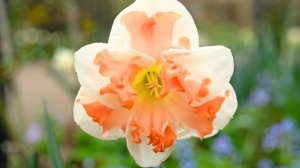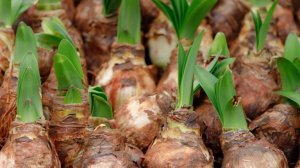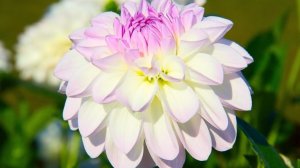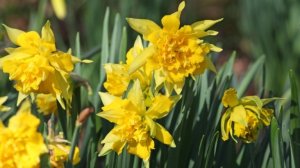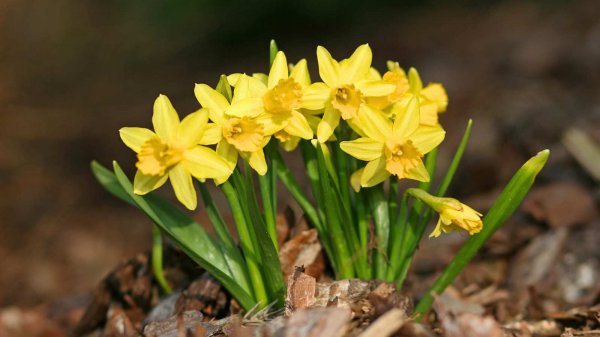
For gardeners with limited space, miniature daffodils offer a way to enjoy the classic spring bloom without requiring a large bed. These compact varieties, often under a foot tall, are well-suited for containers, rock gardens, and the front of borders, providing intricate flowers that reward close inspection.
Miniature daffodils are not a separate botanical division but rather a class within the broader narcissus family, according to the American Daffodil Society. They share the same flower characteristics as full-size daffodils, just on a smaller scale. Typically, these plants reach about six inches in height, with flowers measuring less than 50 millimeters, or roughly two inches, across.
The Royal Horticultural Society categorizes daffodils into 13 divisions based on flower form. Miniatures can fall into any of these, from trumpets and triandrus to cyclamineus and jonquilla types. This diversity means gardeners can select from a range of shapes, colors, and bloom times.
Notable Compact Selections
Several miniature varieties have earned recognition for their garden performance. 'Little Gem', a pre-1938 introduction, features bright yellow trumpet flowers and grows only three to six inches tall. It forces well in pots and blooms early, making it a candidate for holiday displays when planted in late November.
'Minnow', a tazetta type, produces clusters of creamy white petals with soft yellow centers on six-to-eight-inch stems. It is an Award of Garden Merit (AGM) recipient from the Royal Horticultural Society, noted for its fragrance and sturdy growth.
'Baby Boomer' is a jonquilla hybrid from Brent and Becky's Bulbs of Virginia, crossing Narcissus jonquilla with the heirloom 'Avalanche'. It yields five to ten golden flowers per stem, each about one and a half inches across, with a sweet scent.
'Canaliculatus', a tazetta from 1915, remains popular for its white petals and yellow centers, blooming early to mid-season. It thrives in warmer climates and is suitable for borders or containers.
'Ice Baby®', also known as 'Snow Baby', is a pure white variety with frilled trumpets that emerge pale green and age to bright white. It grows four to eight inches tall and is another option for forcing.
'Sun Disc', a late-blooming jonquilla, transitions from buttercup yellow to creamy white as it matures. This 1946 heirloom has received both the AGM and the American Daffodil Society's Wister Award.
'Elka', a classic white trumpet type from English hybridizer Alec Gray, features pointed petals that form a star shape. It begins pale yellow and fades to milky white, with a slight frill on the trumpet.
'Tete-a-Tete', a 1949 introduction, is a prolific bloomer with buttery yellow cups and multiple flowers per stem. It is an AGM and Wister Award winner, known for its sturdy, floriferous nature.
'White Petticoat', a more recent bulbocodium hybrid from 2017, displays broad white cups with yellow centers, resembling papery hoop skirts. It pairs well with 'Golden Bells', a similar yellow form.
'Yellow Sailboat' offers reflexed petals that appear to sail in the breeze, blooming mid-spring. It is a sport of the AGM winner 'Sailboat' and is suitable for forcing.
'Tete Boucle', a double sport of 'Tete-a-Tete', features fully double golden flowers on four-to-six-inch stems. It forces easily and adds a lush look to containers.
'Hawera', a triandrus from 1938, produces up to eight pendant flowers per stem, with lemony petals and pale yellow cups. Named after a New Zealand town, it is an AGM and Wister recipient.
'Golden Quince' presents canary yellow reflexed petals around a darker cup, growing six to twelve inches tall. It is a sport of 'Quince', a 1949 Alec Gray selection.
These miniature daffodils are not only ornamental but also practical for small spaces. They are hardy, deer-resistant, and easy to plant, making them a reliable choice for adding spring color to patios, walkways, and tight garden spots.