When planning a landscape that offers seclusion, evergreen trees are a primary choice for many homeowners. Their persistent foliage provides a continuous visual barrier, unlike deciduous varieties that shed leaves seasonally. The selection process, however, involves more than picking a species that looks appealing; it requires a careful assessment of local growing conditions and the tree's mature size.
Before purchasing, gardeners should consult the USDA Plant Hardiness Zones map to identify their zone. This ensures the chosen species can survive local winter lows. Equally important are the specific site conditions: the amount of sunlight the area receives, the soil's drainage and composition, and the available space for the tree to reach its full dimensions without crowding structures or other plants.
Matching Trees to Site Conditions
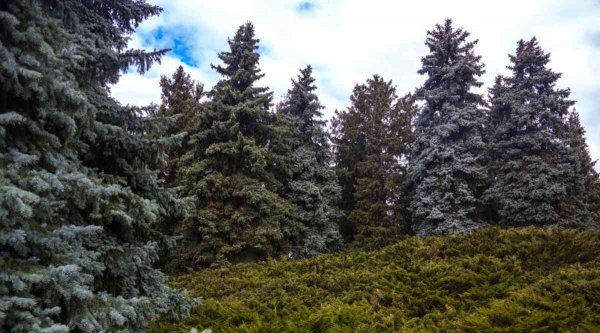
The range of suitable evergreens is broad, encompassing both needled conifers and broadleaf species. For colder regions, the Colorado blue spruce (Picea pungens var. glauca) is a sun-loving conifer native to the Rocky Mountains, thriving in zones 2-3. It features short, silvery blue-green needles and a pyramidal shape, though it requires ample space as it can spread up to 20 feet. Another cold-hardy option is the eastern redcedar (Juniperus virginiana), which is adaptable to zones 2-9 and provides dense screening while serving as a host plant for the juniper hairstreak butterfly.
In warmer climates, broadleaf evergreens offer ornamental value beyond simple screening. The southern magnolia (Magnolia grandiflora), native to the southeastern U.S., is a large tree with glossy leaves and fragrant white summer flowers, suitable for zones 6-10. For smaller spaces, the Chinese fringe flower (Loropetalum chinense) grows 6-8 feet tall in zones 7-9 and produces fringe-like blooms in spring. It may lose leaves during unusually cold winters.
Considerations for Hedgerows and Wildlife
For a classic hedge, arborvitae 'Green Giant' (Thuja 'Green Giant') is a fast-growing columnar tree that can reach 40-60 feet, but it needs at least 12 feet between plants when used as a hedge row. It prefers full sun to light shade and well-drained soil. Alternatively, the American holly (Ilex opaca) offers glossy, spiny leaves and red berries that attract birds, but only female trees produce fruit, requiring a male pollinator nearby.
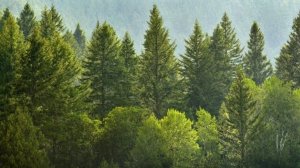
Many evergreens also support local wildlife. The eastern white pine (Pinus strobus) is a tall conifer that provides shelter, while the redbay (Persea borbonia) is a host plant for two butterfly species and produces bluish fruits eaten by birds. For shade gardens, the Florida anise tree (Illicium floridanum) and hardy anise shrub (Illicium parviflorum) are native to the Southeast and thrive in partial to full shade, though they are toxic if consumed.
Planning and Planting Tips
When planting, early spring and fall are ideal times to transplant while trees are dormant, minimizing stress. Newly planted trees require consistent moisture for the first few weeks. Mixing different species in a hedgerow is acceptable, provided they share similar growing requirements and enough space to mature. This approach can enhance diversity and attract more birds.
Growth rates vary; some fast-growing species may fill in within five years, while others take longer. Patience is key, as young trees need time to establish. With careful selection based on zone, sun, and soil, homeowners can create a lush, year-round privacy screen that also contributes to the local ecosystem.