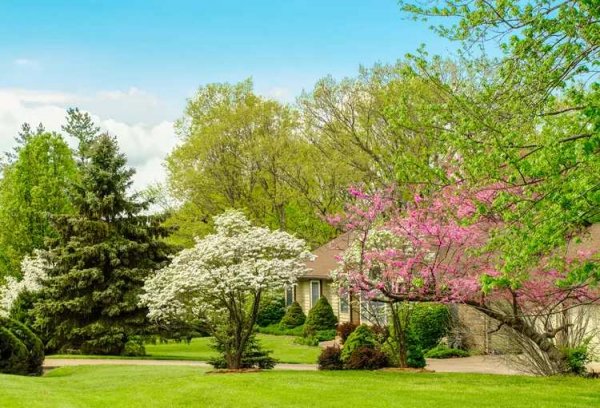
For homeowners with limited front yard space, finding trees that provide visual interest without overwhelming the property can be a challenge. Fortunately, a range of dwarf and compact tree varieties offer the beauty of their larger counterparts in a size that suits smaller homes and gardens. These plants can enhance curb appeal while fitting neatly into tight spaces.
From early-blooming shrubs to evergreens with unique silhouettes, the following 12 varieties are well-suited for small-scale landscaping. Each has specific growing requirements, including hardiness zones and sun exposure, which are noted below.
Flowering Quince and Dwarf Weeping Cherry
The flowering quince (Chaenomeles) is a cold-tolerant shrub that produces showy flowers in shades of pink, red, orange, or white. It typically reaches 3 to 10 feet in height and may yield edible fruit that requires cooking before consumption. It thrives in USDA zones 5 to 9 with full sun and moderate water.
Weeping cherries are known for their sweeping branches and spring blooms. While standard weeping cherry trees can reach up to 25 feet, dwarf varieties stay under 6 feet tall, making them ideal for compact yards. They grow best in zones 5 to 8 with full sun and moderate moisture.
Japanese Maples and Crabapples
Dwarf Japanese maples, such as 'Coonara Pygmy' and 'Crimson Queen,' typically grow between 3 and 10 feet high, offering colorful foliage that intensifies in autumn. They prefer zones 5 to 8 and can tolerate full sun to part shade.
The Sargent crabapple grows 6 to 10 feet tall, producing pink buds that open to white flowers, followed by red fruit that attracts birds. Other dwarf varieties like 'Lollipop' and 'Aros' are also suitable for small spaces. These trees do well in zones 4 to 8 with full sun.
Serviceberries, Hazels, and Redbuds
Saskatoon serviceberry is a fast-growing native shrub that reaches about 10 feet in height. It attracts butterflies with fragrant spring flowers and birds with summer berries. Hardy in zones 2 to 8, it tolerates moist soil and cold winters.
The corkscrew hazel, also known as Harry Lauder's walking stick, offers year-round interest with twisted branches, yellow catkins in spring, and edible nuts. It grows to about 10 feet and is suitable for zones 4 to 8.
The 'Merlot' redbud produces wine-colored buds in spring, attracting pollinators. It reaches 12 feet in height and can serve as a specimen plant or backdrop in flower beds. Other dwarf redbuds include 'Lavender Twist' and Chinese redbud, suited to zones 6 to 9.
Evergreens and Other Compact Choices
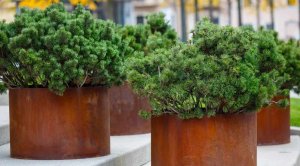
For year-round greenery, the dwarf Alberta spruce is a popular evergreen that grows to about 13 feet. It is cold-tolerant and adaptable to various soil types. Alternatives like dwarf Hinoki cypress and dwarf Scotch pine offer different shapes and needle textures.
The powder puff tree, with fluffy pink or red flowers, grows up to 15 feet and blooms for months, but it requires full sun and is hardy only in zones 9 to 11.
Star magnolias are smaller than standard magnolias, reaching 15 to 20 feet, and bloom with white flowers in early spring. Varieties like 'Ann' and 'Baby Doll' grow to about 15 feet and offer white or deep pink blooms.
The fringe tree, native to the eastern U.S., blooms from May to June with fragrant white flowers that attract birds and pollinators. It stays under 20 feet and is hardy in zones 3 to 9.
Finally, the pagoda dogwood is a graceful tree with arching branches, staying under 25 feet. It produces fragrant white flowers in late spring to early summer and is suitable for zones 3 to 7.
When selecting a dwarf tree, consider the mature height, hardiness zone, and sun exposure to ensure it thrives in your yard. These compact varieties offer a way to add beauty and structure without sacrificing space.