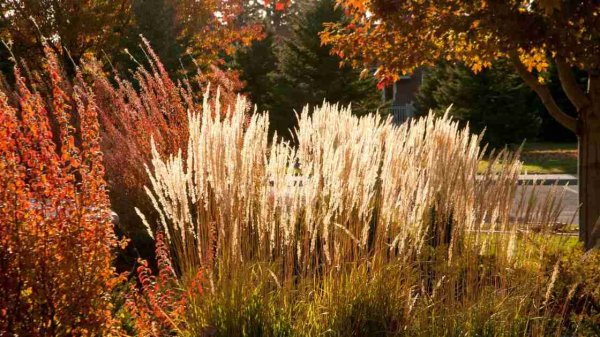
As summer fades into September, gardens across many regions begin a slow transformation. Leaves shift from deep greens to fiery reds, oranges, and purples, offering a second season of visual interest. For gardeners seeking a dynamic landscape, planting perennials with foliage that changes color through the year can turn a static bed into an ever-evolving display.
Perennials fall into two broad categories: woody plants, which retain above-ground stems through winter, and herbaceous perennials, which die back to the ground in cold climates. Both groups include species and cultivars prized for their seasonal color shifts, from the purple-maroon autumn leaves of the 'Raywood' ash to the golden needles of the Arkansas blue star.
Woody Perennials for Structure and Shade
Among woody perennials, the 'Raywood' ash (Fraxinus oxycarpa 'Raywood') stands out for its lacy, compound leaves that emerge light green, deepen to dark green in summer, and turn a royal purple-maroon in autumn. This large tree, reaching 30 to 80 feet, is often used as a street tree and needs ample space to thrive in zones 5-8.
For smaller gardens, the 'Rose Glow' barberry (Berberis thunbergii 'Rose Glow') offers reddish leaves with creamy white-pink variegation in spring, maturing to solid purple-maroon by fall. This 3-6 foot shrub, hardy in zones 4-8, also produces small yellow blooms in spring. The dawn redwood (Metasequoia glyptostroboides) is a unique conifer that drops its needles each autumn, turning coppery red before falling. Reaching 70-100 feet, it thrives in zones 4-8 and reveals intricately fissured bark after leaf drop.
The Eastern redbud 'Forest Pansy' (Cercis canadensis 'Forest Pansy') offers heart-shaped leaves that emerge green-purple, shift to maroon, and then to red, orange, and bronze in fall. This 20-30 foot tree, suitable for zones 5-9, is prized for its pink spring blooms and compact stature. For shade gardens, the full moon maple 'Aureum' (Acer shirasawanum 'Aureum') provides sunshine-yellow foliage with red tinges, turning golden to orange-red in autumn; it grows 15-20 feet in zones 5-7.
Hybrid witch hazel (Hamamelis x intermedia) is notable for both its late-winter blooms and its fall foliage, which can be yellow, red, or orange depending on the cultivar. This 15-20 foot shrub, hardy in zones 4-9, offers a range of bloom colors from dark purple to bright yellow. The katsura tree (Cercidiphyllum japonicum) has heart-shaped leaves that start light purple, become blue-green in summer, and turn shades of orange, red, and gold in autumn. It grows 40-60 feet and can be trained to a single trunk or allowed to form multi-trunk specimens.
Quaking aspen (Populus tremuloides) is a North American native with the widest distribution of any tree on the continent. Its leaves emerge lush green with pale undersides, then turn yellow in fall, sometimes with red or orange hues. These 40-50 foot trees spread through roots to form supercolonies and produce a distinctive rustling sound in the wind. The sawleaf zelkova (Zelkova serrata), native to eastern Asia, features divided leaves that shift color through the seasons, along with peeling bark and non-showy flowers; it reaches 50-80 feet in zones 5-8.
Sourwood (Oxydendrum arboreum) is a shade-tolerant U.S. native that grows 20-30 feet and produces bell-shaped flowers that attract pollinators. Its green leaves turn red, purple, and orange in autumn. Vine maple (Acer circinatum), native from British Columbia to California, offers colorful bark, leaves, and seed pods; its foliage shifts from green to red, purple, and yellow in fall. The weeping larch (Larix occidentalis) is a deciduous conifer with pendulous branches that need staking; its green needles turn yellow in autumn before dropping.
Herbaceous Perennials for Ground-Level Color
Herbaceous perennials, which die back to the ground in winter, also offer striking fall color. The Arkansas blue star (Amsonia hubrichtii), native to mountainous regions of Arkansas and Oklahoma, forms a spreading blanket of needle-like leaves that turn bright golden yellow in autumn. Autumn fern (Dryopteris erythrosora) emerges with bright red-orange fronds that shift to green, and spreads via underground rhizomes to form colonies. Barrenwort (Epimedium spp.), also known as bishop's hat, features heart-shaped leaves; the 'Rubrum' cultivar emerges green with maroon tinges and turns red-maroon again in fall.
Bloodred geranium (Geranium sanguineum) gets its name from its leaves turning bright red after frost; it produces hot pink blossoms in spring and beaked seed pods in summer. Columbines (Aquilegia spp.) are highly varied, with many native to North America; different species may turn orange, red, or brown in fall. Hostas (Hosta spp.) are known for their colorful foliage, and many varieties turn yellow in autumn; they are cold-hardy and shade-loving, with small white blooms.
Hybrid peonies (Paeonia spp.) emerge in spring with lacy green foliage, bloom in spring, and their fronds turn black-raspberry red in fall. Little bluestem 'The Blues' (Schizachyrium scoparium 'The Blues') is a U.S. native grass with blue-tinged blades that turn fiery red and burnt orange in response to cold. Maiden grass 'Graziella' (Miscanthus sinensis 'Graziella') is a cultivar with a low seed set, offering color-changing properties without the invasive spread of the species.
Pigsqueak (Bergenia crassifolia) has glossy leaves that turn purple, red, and orange with frost; its name comes from the squeaking sound the leaves make when rubbed together. Sensitive fern (Onoclea sensibilis) is sensitive to cold and drought; its fronds turn yellow in autumn and then brown after frost. Shining blue star (Amsonia illustris) has needle-like blades that turn golden with frost, and it produces blue-white flower clusters in spring. Switchgrass 'Shenandoah' (Panicum virgatum 'Shenandoah') is a native grass with green blades that gain a blue hue in summer and turn burgundy red in autumn, alongside its seed heads.
Incorporating these perennials into a garden plan can create a landscape that changes with the seasons, offering new visual interest from spring through fall. Whether used as focal points, in borders, or as ground covers, these plants reward gardeners with a dynamic display that evolves throughout the year.