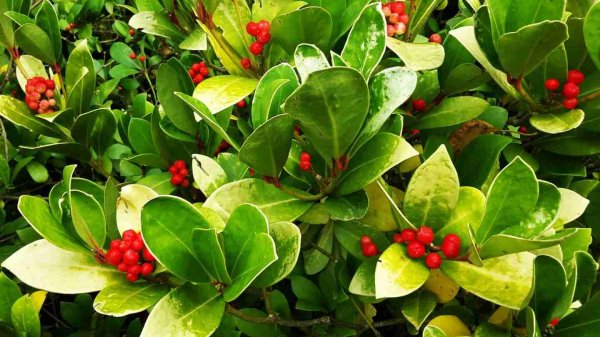
For gardeners seeking a resilient, evergreen ground cover that thrives in shade, wintergreen (Gaultheria procumbens) offers a native solution with year-round appeal. This low-growing shrub, also known as eastern teaberry, is a member of the Ericaceae family, which includes heaths and blueberries. It is native to the eastern United States and parts of Canada, and it flourishes in the cool, moist conditions of woodland gardens.
Wintergreen is a compact plant, typically reaching only 4 to 8 inches in height, with a slow, spreading habit. Its glossy, dark green leaves are rounded and smooth, and they emit a characteristic fragrance when crushed. In summer, small, white, bell-shaped flowers appear, which are followed by bright red berries in late summer and fall. These berries often persist into winter, providing a food source for birds and small mammals. The foliage also turns a burgundy color in autumn, adding seasonal interest.
This plant is well-suited for gardeners in USDA hardiness zones 3 through 7. It prefers partial to full shade and organically rich, acidic soil with a pH below 6.0. Consistent moisture is important, but the soil should be well-drained to avoid soggy conditions. Wintergreen is notably drought-tolerant once established, though supplemental watering during prolonged dry spells is beneficial.
Propagation and Transplanting
Propagating wintergreen can be done through division, stem cuttings, or by digging up young root-sprouted plants. Division of established colonies is the simplest method: carefully dig out plants from the edge of the colony, keeping roots intact, and transplant them immediately. For cuttings, select a healthy stem that is already touching the ground and has begun to root, then cut and pot it in fresh soil. Transplanting is best done in cooler months to minimize stress, and mulching helps retain soil moisture and suppress weeds.
Growing Conditions and Care
Wintergreen is a low-maintenance plant that does not require regular fertilization. If soil is poor, mixing in organic compost at planting time can help. Adding chopped leaf mulch each fall mimics natural forest conditions and enriches the soil. The plant is generally pest-resistant, but occasional issues with aphids, thrips, powdery mildew, or leaf spot may arise. Aphids and thrips can be dislodged with a strong jet of water, while fungal issues like powdery mildew and leaf spot are best prevented by ensuring good air circulation and watering at the base of the plant.
In the garden, wintergreen works well as a ground cover under trees, along shaded paths, or in containers. It pairs nicely with taller shrubs like azaleas and lowbush blueberries, and it can be planted alongside spring ephemerals, as its persistent leaves fill the space when those wildflowers go dormant.
Varieties to Consider
Several species and cultivars of wintergreen are available, each with unique characteristics. The striped wintergreen (Gaultheria maculata) features narrow leaves with a silvery stripe and is more tolerant of dry conditions. Oregon wintergreen (Gaultheria shallon), also known as salal, is a Pacific coast native with leathery leaves and pink-stemmed flowers. Western teaberry (Gaultheria ovatifolia) and alpine wintergreen (Gaultheria humifusa) are other native options, each with distinct foliage and fruit colors. For ornamental value, the cultivar 'Winter Splash' offers variegated leaves with pink edges and bright red berries.
Wintergreen's ability to attract pollinators and provide food for wildlife makes it a valuable addition to any shade garden. Its evergreen foliage ensures year-round structure, and its low competition with other plants makes it an ideal companion in a woodland setting. For gardeners looking to fill challenging shady areas with a tough, beautiful native, wintergreen is a reliable choice.